Kanu Hawaii is a tax-exempt, nonprofit corporation that is overseen by a volunteer board of directors and administered by a small staff. In 2005, the founders of Kanu Hawaii asked each other three questions:
1. What do we love about Hawaii?
Our connection to place, the strength of our communities, our diverse traditions, our island values…
2. What concerns us about the future?
Shrinking opportunities, environmental degradation, the loss of communities, inequality, apathy, greed, intolerance… in Hawaii and throughout the world.
3. What can we do about it?
This question had no easy answer. How do you build a movement when so many of us feel powerless in the face of huge problems? How do you demand change without compromising our island values?
We begin by trying our best to live by the island values that shape Hawaii's unique way of life. None of us are perfect, so we strive to be better. The actions we take, the issues we discuss, and the things we ask of others are guided by values such as:
Humility and patience
Obligation to family and community
Hard work and sacrifice
Honoring our ancestors
Acting for the sake of children
Aloha aina
Taking only what we need
Leaving places better than we find them
Respect for the beliefs and rights of others
Generosity and reciprocity
Building unity
Island values are the foundation of Kanu Hawaii. Please keep these values in mind when contributing and interacting with others on this website.
Next, we are driven by the concept of kuleana. In an age when we are often preoccupied with me and what is mine, kuleana is one of the most important words in the world.
We are often told that rights come with certain responsibilities. Kuleana reminds us that these are, in fact, one and the same. A right is a responsibility. An obligation is a privilege. When we neglect our kuleana — when we covet our rights and property while ignoring our responsibilities and concerns — society breaks down. The people of Kanu Hawaii hear our kuleana calling to us.
Individuals have a kuleana to strive every day to, in the words of Gandhi, become the change we seek in the world.
Businesses have a kuleana to recognize social obligations even if they aren't legally required, to embrace responsibilities as employers, to listen to the needs of communities, to have a conscience about the messages they disseminate, and to walk lightly on the earth.
Government leaders have a kuleana to look out for the public good, to communicate accurately and effectively, to protect the rights of others, to plan beyond the terms of election cycles, to reject the enticement of those who use government for personal gain, and to create an environment for individuals and businesses to better fulfill their kuleana.
So with island values and kuleana in mind, Kanu Hawaii chooses to practice island-style activism: we begin with something we can certainly change — our own lives. In doing so, we learn that making and fulfilling commitments:
This is island-style activism. To lead by example with humility and perseverance. To persistently ask for change from a position of strength – armed with common values, information, wisdom, and integrity.
It is with island-style activism that we pursue a vision of a better Hawaii.
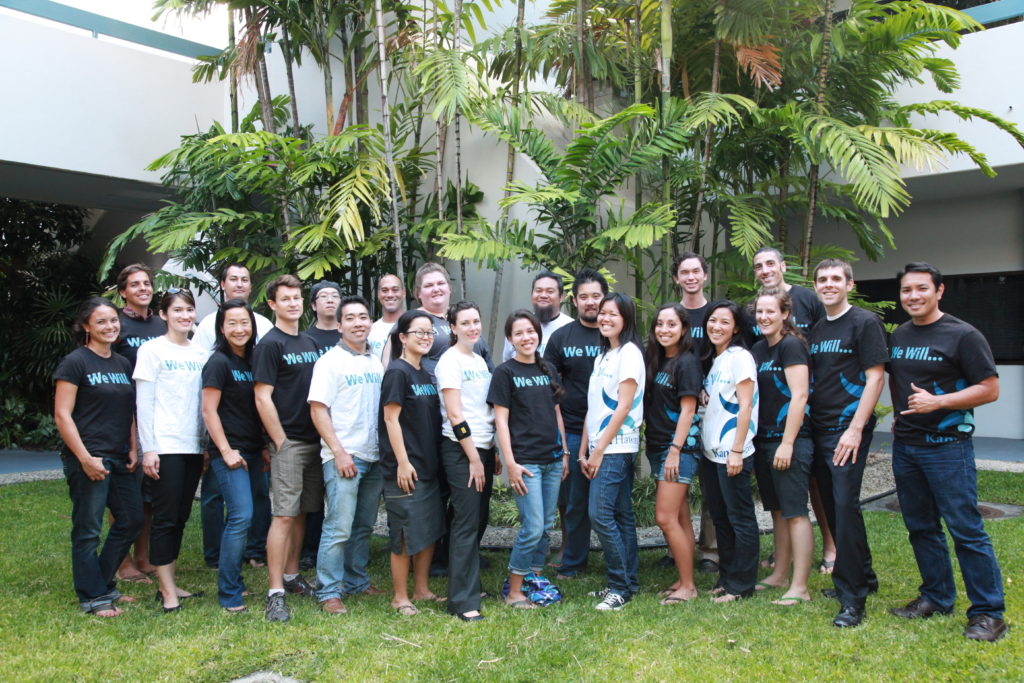
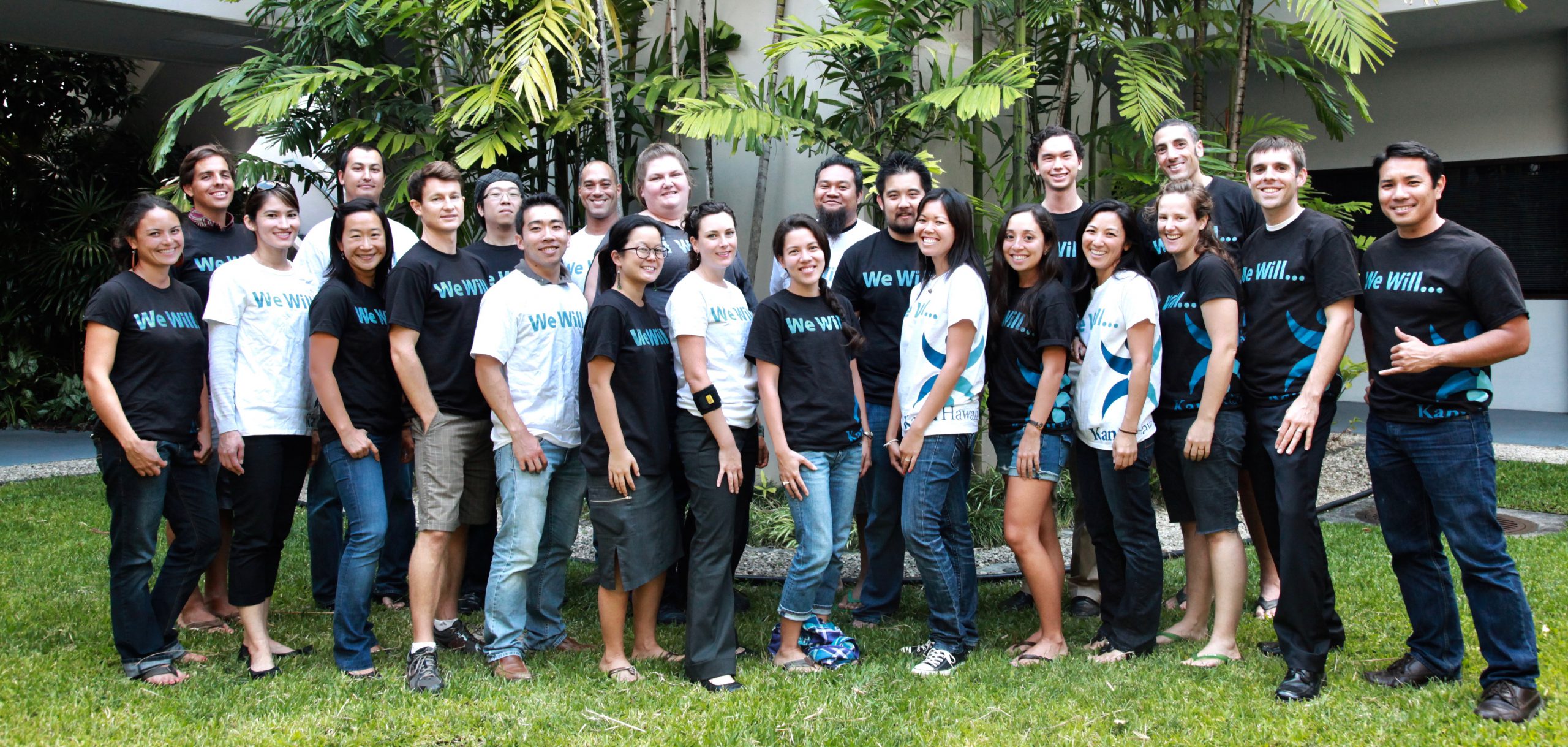
Kanu Hawaii was founded by a group of 40 young people who share a deep love for the islands. They were moved by Hawaii's unique culture and way of life, and feared this way of life was under threat. The issues that concerned them were familiar ones. They hoped for jobs that would support their families, a good education for their children, continuing connections to the natural environment and cultural diversity that made growing up in Hawaii a special experience. They envisioned a future where these foundations of island living were strong.
Yet, they witnessed the erosion of these foundations in their daily lives: alarming changes in the natural environment, declining civility and respect, struggling schools, a high cost of living, and few well-paying careers. They also recognized they were not the first to share such concerns. Hawaii had wrestled with these issues for decades, yet troubling trends had continued, unabated.
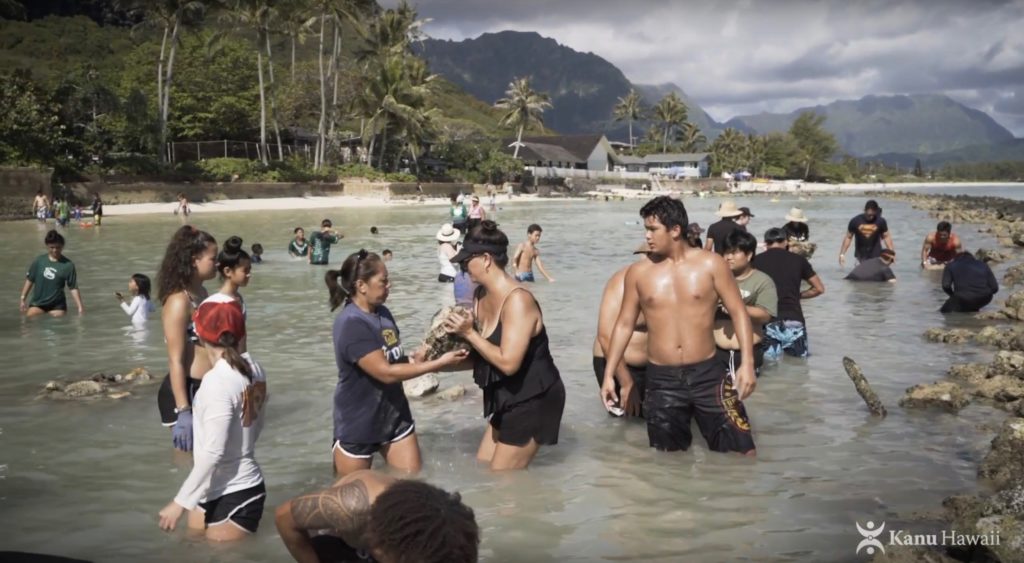
In an attempt to generate a movement, each committed to make at least one change in their own lives to address their concerns. They discovered that small steps, taken together, had significant impact. For instance, their personal commitments to recycle diverted nearly 16 tons of waste from Hawaii's overflowing landfills every year. Just as important as measurable impact, was the fact that their commitments expressed the island values and culture that originally inspired them.